
Importance of Motors & Generators in Marine & Offshore Applications
As opposed to engine driven propulsion systems of the past, modern ships and vessels are now typically equipped with electrical propulsion systems. This refers to the combination of generators to generate the required power, cabled to the thruster/ propulsion motors which are easily manoeuvrable and maintainable. The generators may be driven by different types of prime movers such as diesel; heavy fuel oil or gas engines, but the electric power is delivered to the motor either directly or via the storage batteries. Such system has numerous advantages over direct propulsion. Generators which produce alternating current (A.C) are called Alternators.
The benefits of electrical propulsion systems are:
- Easier to operate and maintain
- Easier to locate thrusters and generators because there is no direct mechanical transmission involved
- No extensive shafting, shaft bearings and alignment requirements
- Eliminates the need of rudder/ steering mechanism as the propellors can be variable speed and variable pitch which are easily controlled electrically.
- Less noise and vibrations as electrical motors run smooth and are less noisy as compared to engine driven shaft system.
Thus, generators and motors play vital roles in any ship, as well as the marine and offshore asset.
Application of Motors in Marine & Offshore
Electric motors carry out essential marine tasks in offshore, coastal and inland marine environments, and are also extensively used in modern ships for propulsion systems. While ships use motors to drive pumps, compressors, air conditioning plants, hydraulic pressure units, winches, cranes etc, oil platforms on the other hand rely on pumps to drive the pumping rod, process recovered oil and transfer it to tankers. Tankers and other ships are equipped with pumps to expel bilge water, transfer fluids and ventilate the engine and decks. Meanwhile, back at the port, more transfer pumps await as electric motors also power many other offloading and processing equipment.
Importance of Maintenance of Motors & Generators / Alternators
Motors are inherently highly reliable, requiring little routine maintenance. This remains true for most duties but it may not be the case when environmental conditions are aggressive. Marine and offshore assets are exposed to corrosive environment all the time, and marine motors must withstand a constantly wet and high-humidity environment. Not only can water ingress ruin electrical components, it can also ruin materials via corrosion. This is largely solved by component material selection to prevent oxidation or galvanic corrosion.
A key consideration for electric motors is their ability to handle environmental challenges of life at sea. Motor reliability is key to both equipment functionality and personnel safety, and a replacement might be an ocean away. Nonetheless, there are some unique design elements for marine electric motors to ensure that they are reliable and dependable, especially under tough conditions.
The insulation of motors and generators can get affected by the humid and oily environment in marine and offshore assets caused by the environment. Hence, proper care and maintenance of motors and generators of any marine and offshore asset is essential, not only for operational reliability and good efficiency, but also to extend the life cycle of its components, while reducing degradation or even failure of the machinery. All of this will help minimise risk for accidents, damage, and costly repairs down the line, and more importantly, routine motor maintenance will help to ensure that a generator will run smoothly and efficiently during a power failure.
Electrical issues are known to kill, injure, and cause property destruction if not maintained properly. The necessity for periodic inspection is noted in various regulations that deal with safety at work.
Basic parts of a motor:
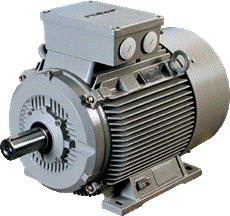
A simple motor has the following parts:
- A power supply – mostly DC for a simple motor
- Stator: Field Magnet, which could be a permanent magnet or an electromagnet.
- A rotor or armature
- Main shaft
- Commutator
- Brushes
- Support bearings
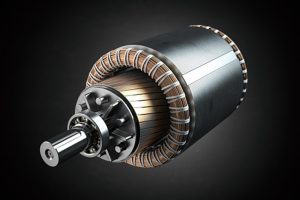
All the above parts must be taken care of and carefully maintained.
The Basics of Motor Maintenance:
-
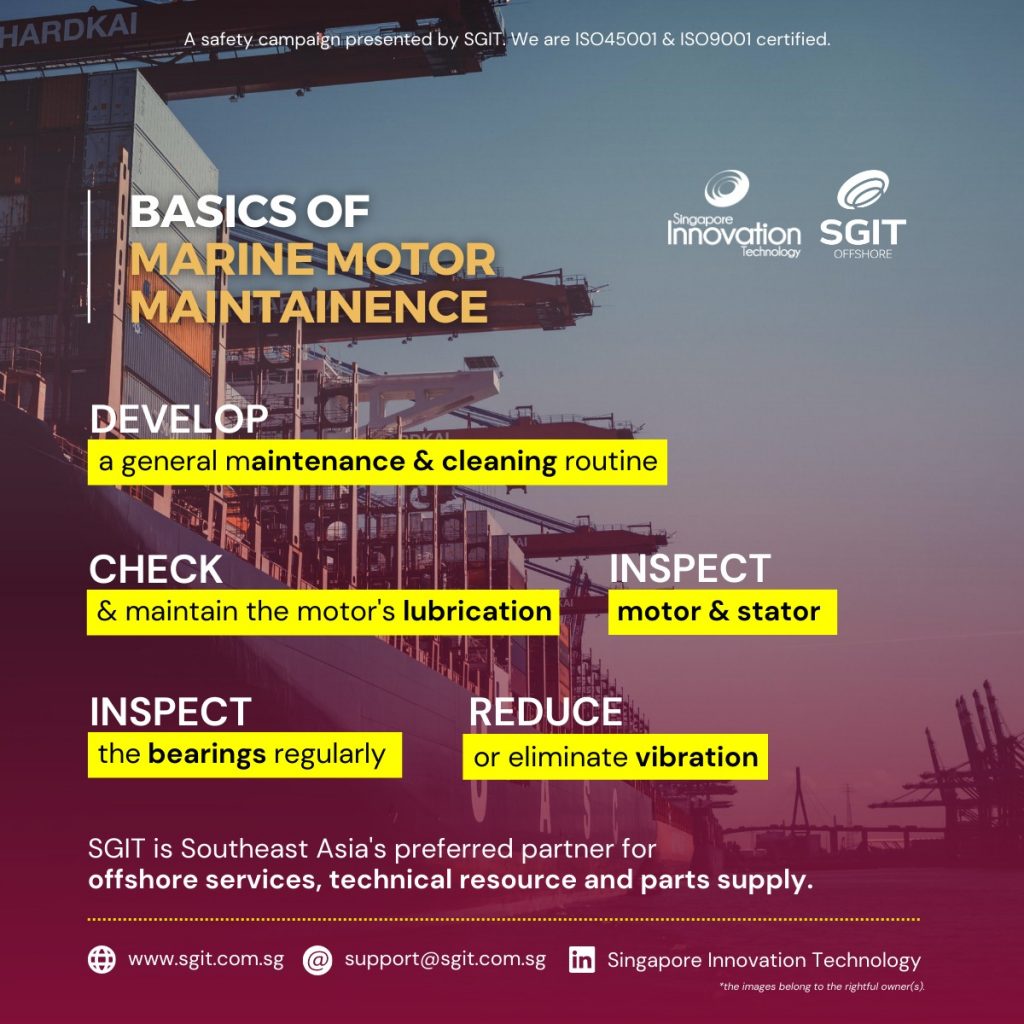
Develop a general maintenance and cleaning routine
Every company should have a cleaning routine in place. Keeping the motors and generators clean can significantly improve its performance and lifespan. They should never have excessive grease, dust, or other debris on or in any of its parts. Dust is a common culprit for overheating because of poor air circulation.
-
Check and maintain the motor’s lubrication
Proper lubrication of electric motor bearings is essential to maintain them in peak operating condition and, ultimately, in reducing unnecessary downtime. Grease is primarily used as an electric motor bearing lubricant in marine and offshore applications because of its simplicity of application and unique characteristics. The primary functions of an electric motor bearing grease are to:- Reduce friction and prevent wear
- Protect bearings against corrosion
- Act as a seal to prevent entry of contaminants
-
Regularly inspect the bearings
Inspect the condition of bearings regularly. Any scores, damages, abrasions, corrosion marks, etc. are to be checked and corrected. Bearings have to be replaced if found to be defective. Bad bearings can cause excessive bearing temperature, excessive noise and vibration and draw excessive current. Alternatively, these are symptoms of defective bearings and impending bearing failure.
-
Reduce or eliminate vibrations
There can be one or more reasons for excessive vibration of motors. Electronic or mechanical imbalance, failed bearings, loose foundations, faulty gears, wear and tear or misalignment, are amongst the examples. Hence, periodic measurement of noise and vibration is one of the key maintenance activity for successful maintenance of
-
Inspect the rotor and stator
The main objective of motor testing is to assess the integrity of a motor and ultimately prevent the occurrence of unnecessary failure. Electric motors are highly integrated machines that can develop faults in many areas and, if left unattended, a damaged motor can result in dangerous working conditions. Electrical motor testing evaluates static parameters such as insulation (the barriers between winding interconnections/winding to earth), wire damage, current leakage, and/or dynamic parameters such as balance, temperature rise, distortion, etc. Mechanical motor testing on the other hand, often includes evaluating a motor’s rotor for cracks and shorted laminations. Typically, the following tests are done in an electric motor:- Insulation resistance test
- Polarization index test
- Step voltage test
- Surge test
- Mechanical (Rotor) tests
- Growler test
- Single-phase rotor test
- High current rotor test
- Current spectrum analysis
- Vibration spectrum analysis