
What is Variable Frequency Drive:
A Variable Frequency Drive (VFD) controls the speed, torque and direction of an AC induction motor. It takes in fixed voltage and frequency AC input, and converts it into a variable voltage and frequency AC output. In other words, VFD is basically a combination of computer and power supply.
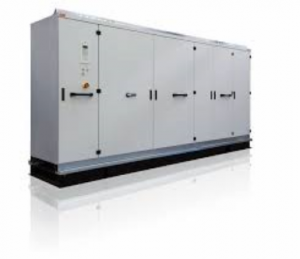
Importance of Maintenance of VFD in Marine and Offshore Environment:
It is a commonly known fact that marine and offshore assets are exposed to corrosive environment all the time. The continuous or neglected (when they are kept idle / cold stacked) usage of offshore assets may cause fatigue failures. Hence, proper maintenance of marine and offshore assets is important in enhancing operational reliability, increasing efficiency, reducing machinery degradation or failure, and extending the life cycle of its components.
VFD is a sensitive equipment like a computer, which means the same safety and equipment precautions that apply to a computer and a power supply will also be applied to a VFD. A properly maintained VFD can provide decades of cost-effective service. As such, regular VFD inspections and maintenance must be made as part of asset maintenance regime.
Here are the basics of VFD maintenance:
- Keep the VFD clean
- Maintain VFD temperatures
- Keep the equipment dry (moisture and oil free)
- Keep the connections tight
- Conduct visual inspections
Keep the VFD Clean
Marine and offshore environments are bound to have airborne dust, debris and oil mist which can negatively impact a VFD. Regardless of the VFD chassis type, it is critical that the heat sink and fans are kept clean. You are recommended to periodically wipe, clean and air spray all accumulations from the VFD.
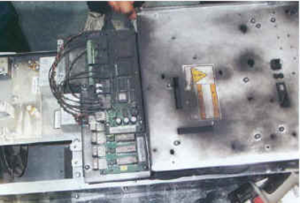
Dust on an electronic device can cause malfunction or even worse, device failures. At the same time, dust also absorbs moisture, which may also contribute to failure in the long run. Spraying air through the heat sink fan on a periodic basis is a good preventive measure. Discharging compressed air into a VFD is also a viable option in some environments. If you decide to use compressed air for cooling, bear in mind to use air that is oil-free and dry, or it is likely to do more harm than good.
Meanwhile, the VFD cabinets are typically air and water tight to prevent dust, moisture and oily mist from getting in.
Maintain VFD Temperatures
It is not unusual for VFDs to be housed in enclosures that may experience heat spikes. As such, one needs to ensure to install VFD drives in air-conditioned compartments with temperature and humidity control systems, as well as appropriate air circulation. There are also water cooled VFDs with external cooling arrangement for the circulating water.
Keep the Equipment Dry
In marine and offshore environment, humidity is very high and the atmosphere is often salty. The picture below depicts a control board that has been exposed to a moist environment. VFD must be mounted in a clean, dry area of a mechanical room which is free from moisture. After all, water and electricity do not mix well in industrial settings. Moisture does not only affect electrical insulation, but will also cause corrosion, erratic behaviours, and equipment failures.
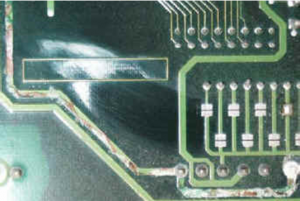
On the other hand, condensation is another issue of concern to VFD. Some VFD manufacturers include a type of “condensation protection” on their earlier product versions. When the mercury dips below 32 degrees Fahrenheit, the software logic would not allow the drive to start. Unfortunately, VFDs nowadays seldom offer this protection. If you operate the VFD all day every day, the normal radiant heat from the heatsink should prevent condensation.
Keep Connections Tight
While this sounds basic, checking connections is a step many people miss or do incorrectly – and the requirement applies even in clean rooms. Heat cycles and mechanical vibration can lead to sub-standard connections. This may result in uneven VFD functions. It is strongly recommended that you check the connections as part of an ongoing maintenance plan. Retorquing screws is not a good idea, and further tightening an already tight connection can ruin the connection.
Bad connections eventually lead to arcing. Arcing at the VFD input could result in nuisance over voltage faults, clearing of input fuses, or damage to protective components. Arcing at the VFD output could result in over-current faults, or even damage to the power components. Loose control wiring connections can cause erratic operation. A loose speed reference wire can cause the drive speed to fluctuate, resulting in scrap, machine damage, or personnel injury.
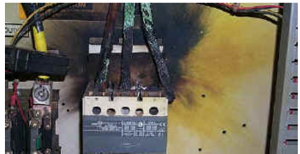
Arcing Caused by Loose Input Contacts
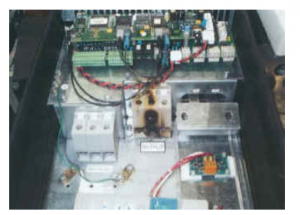
Arcing Caused by Loose Output Contacts
Conduct Visual Inspections
The first step to proactive maintenance is to visually inspect VFDs weekly. Have maintenance personnel look for the above-mentioned issues and others that could impact VFD operations. Key elements in a visual inspection include connections, fibre optic cables, emergency circuits, and area cooling systems, among others.
Additional Steps
As part of a mechanical inspection procedure, don’t overlook the internal components of a VFD. Check circulating fans for signs of bearing failure or foreign objects – usually indicated by unusual noise or shafts that appear wobbly.
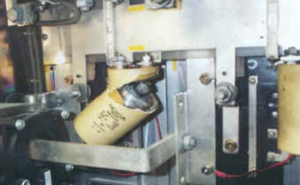
Inspect DC bus capacitors for bulging and leakage. This could either be a sign of component stress or electrical misuse. Below pictures show fan and capacitor stress problems.
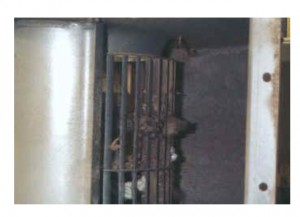
Foreign object in fan
Take voltage measurements while the VFD is in operation. Fluctuations in DC bus voltage measurements can indicate degradation of DC bus capacitors. One function of the capacitor bank is to act as a filter section (smoothing out any AC ripple voltage on the Bus). Abnormal AC voltage on the DC bus indicates the capacitors are headed for trouble. Most VFD manufacturers have a special terminal block for this type of measurement and also for connection of the dynamic braking resistors.
In terms of the spare VFDs, store them in a clean, dry environment, with no condensation allowed. Place this unit in your PM system so you know to power it up every 6 months to keep the DC bus capacitors at their peak performance capability. Otherwise, their charging ability will significantly diminish. A capacitor is much like a battery, which commands a need to enter into service soon after purchase or it will suffer a loss of usable life.
Regularly monitor heat sink temperatures. Most VFD manufacturers has made this task easy by including a direct temperature readout on the Keypad or display. Verify where this readout is, and make checking it mandatory in your weekly or monthly review of VFD operation.
While the best way to ensure a VFD does not needlessly falter is proactive maintenance, breakdowns remain a reality in the marine and offshore environment. These may be caused by the lack of awareness and recognition in environmental effects on machinery, hard impacts or other unforeseen circumstances.
VFD Troubleshooting Tips:
Here are five (5) VFD troubleshooting tips can help get companies back online, saving you from conducting repeat maintenance and replacement:
- Check diagnostics display: VFDs usually come equipped with troubleshooting functions. The display module can indicate issues such as overheating, irregular voltage, or even a popped fuse. This is often the best place to begin troubleshooting.
- Check for moisture: Without making physical contact, take a visual inventory of the machinery and look for moisture accumulations. Water can cause shorts and other damage. Take safety precautions, and do not touch any electrical equipment that may have gotten wet.
- Check for dust: If the VFD has not been thoroughly cleaned, it may have grit accumulations inside that may cause a malfunction in the future. In such cases, it may be necessary to remove the unit and replace it until the affected VFD can be cleaned and reinstalled. Organizations are wise to have backups in the event of a significant breakdown or issue.
- Check VFD connections: While wearing appropriate safety equipment, visually and physically check for loose connections. If the VFD seemed to be delivering uneven output recently, cable or connection problems may be the culprit.
- Resonance testing: When vibrations place undue stress on equipment, they tend to become increasingly unreliable. Issues may include impacted welds, and loose bolts, among others. Consider running a diagnostic test to see if the VFD is operating in what is called an “excited state” as a result of resonance.
Above all, a properly maintained VFD can provide decades of cost-effective service. Like any piece of equipment, though, it requires and is highly dependent on good maintenance and care. Making VFD inspections and maintenance part of preventive maintenance schedule gives good reliability and operational performance. SGIT’s year of experience in the industry has enabled us to remain as our clients’ partner of choice to perform VFD maintenance, on top of full suite offshore services and parts supply.